The global coral reef ecosystem is facing unprecedented threats, highlighted by one of the most devastating coral bleaching events recorded over the past two years. With 2024 officially declared the warmest year in recorded history—reaching 1.55°C above pre-industrial temperature levels—the urgency to develop sustainable solutions for coral reef conservation has never been greater. As climate change, ocean warming, and pollution continue to impact marine biodiversity, global conservation efforts are increasingly focused on developing scalable and cost-effective solutions to preserve coral reef ecosystems.
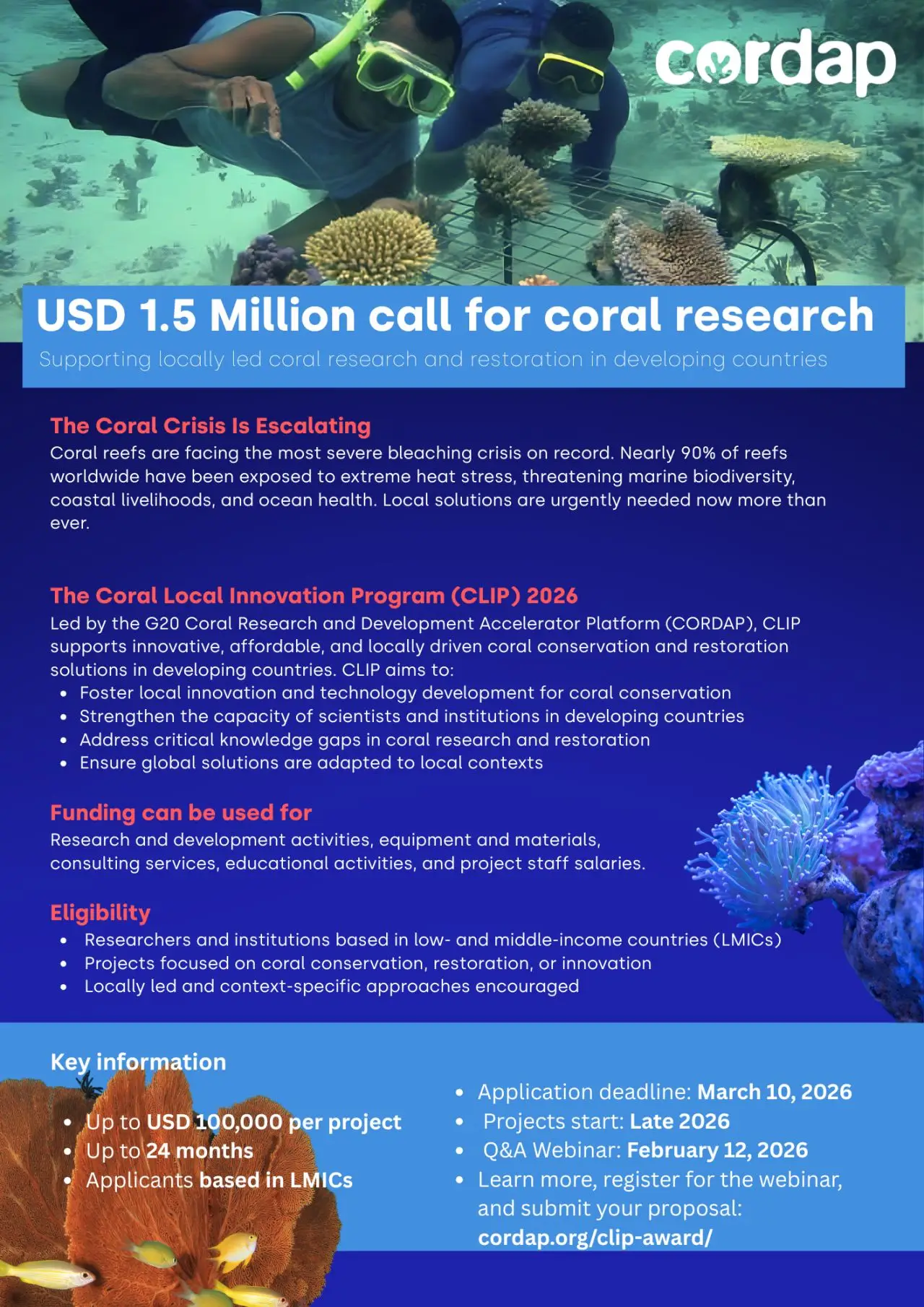
To address these urgent environmental challenges, the Coral Local Innovation Program (CLIP) has been launched as a Small Grants Program under the G20 Coral Research & Development Accelerator Platform. The initiative aims to fund innovative research and development (R&D) projects designed to tackle local coral conservation and restoration challenges, particularly in developing countries.
Program Overview and Objectives
The Coral Local Innovation Program (CLIP) focuses on identifying and supporting creative, locally driven coral conservation solutions that can be adapted and replicated in similar environmental and socioeconomic contexts. The program emphasizes affordable and practical interventions that empower local researchers, conservationists, and community groups working directly with coral reef ecosystems.
A key priority of the CLIP initiative is capacity development. By investing in researchers and conservation teams from Low- and Middle-Income Countries (LMICs), the program seeks to strengthen local scientific expertise and enhance long-term sustainability in coral restoration efforts. Although the primary applicants must be based in LMICs, the program encourages collaboration with supporting partners and experts from high-income countries to facilitate knowledge exchange and technical support.
An important feature of this funding call is its inclusive and regionally informed evaluation process. All proposal reviews will be conducted by coral reef experts from developing nations, ensuring that funding decisions reflect local environmental realities, social priorities, and region-specific conservation challenges.
Eligibility and Project Focus Areas
The CLIP 2025 call specifically supports research teams, academic institutions, NGOs, and conservation organizations based in LMICs. Eligible projects must demonstrate strong scientific or technological innovation while addressing pressing coral conservation and restoration issues.
Projects funded under this call are expected to focus on:
- Developing innovative and affordable coral restoration techniques
- Strengthening community-based coral reef management strategies
- Advancing scientific research into coral resilience and climate adaptation
- Designing scalable solutions capable of replication across different reef systems
- Enhancing local research capacity and technical expertise
Applicants are encouraged to submit proposals that demonstrate practical implementation strategies, measurable environmental impact, and long-term sustainability.
Proposal Review and Evaluation Process
All submitted proposals will undergo a competitive review process based on scientific merit, innovation potential, feasibility, and scalability. Additional evaluation criteria include the project’s capacity-building potential, stakeholder engagement, and alignment with global coral conservation priorities.
Applicants must submit their proposals using the official CLIP 2025 documentation package, which includes the call document, submission form, budget template, and statement of collaboration. These documents are designed to guide applicants in preparing comprehensive and competitive project proposals.
Supporting Resources and Strategic Initiatives
In addition to the CLIP grant opportunity, the platform continues to support global coral conservation through various research roadmaps and strategic initiatives. Recent publications have addressed critical gaps in coral disease research, capacity development in coral reef conservation within the Global South, and the effects of land-based pollution and water quality on reef ecosystems.
The platform has already funded breakthrough coral restoration projects worth over USD 1.5 million, demonstrating its commitment to supporting high-impact conservation research. It has also partnered with major global initiatives such as the The Earthshot Prize to expand its global search for coral conservation innovators.
Further collaborations with public figures and advocacy organizations have helped increase awareness and support for coral conservation efforts. Notable partnerships include conservation advocacy initiatives involving musical artist James Blunt, environmental advocate Philippe Cousteau Jr., and internationally recognized DJ and producer Steve Aoki through collaboration with Aoki Racing.
The platform’s global impact was further recognized when it received the prestigious Mirpuri Foundation Ocean Award in 2025, highlighting its excellence in marine scientific innovation and conservation leadership.
Why This Opportunity Matters
Coral reefs support nearly 25% of all marine life and provide critical economic, environmental, and protective benefits to coastal communities worldwide. However, accelerating climate change and human activities are pushing these ecosystems toward irreversible decline. The Coral Local Innovation Program presents a unique opportunity for researchers and conservation practitioners in developing countries to lead innovative coral restoration efforts while contributing to global environmental sustainability goals.
By prioritizing locally driven solutions and empowering scientists in vulnerable regions, the program represents a vital step toward preserving coral reef ecosystems for future generations.
Application Timeline and Submission
Applicants are encouraged to review the official call documents carefully and prepare submissions in accordance with the outlined guidelines. Complete application packages, including budget templates and collaboration statements, must be submitted through the designated application platform.
Interested applicants should monitor official program announcements and deadlines to ensure timely submission.
Apply HERE
The deadline for proposal submission is March 10, 2026, at 18:00 UTC. To assist applicants, we will host a Q&A webinar on February 12, 2026, at 12:00 UTC
Find out more from here
Subscribe to OFY for more opportunities like this…