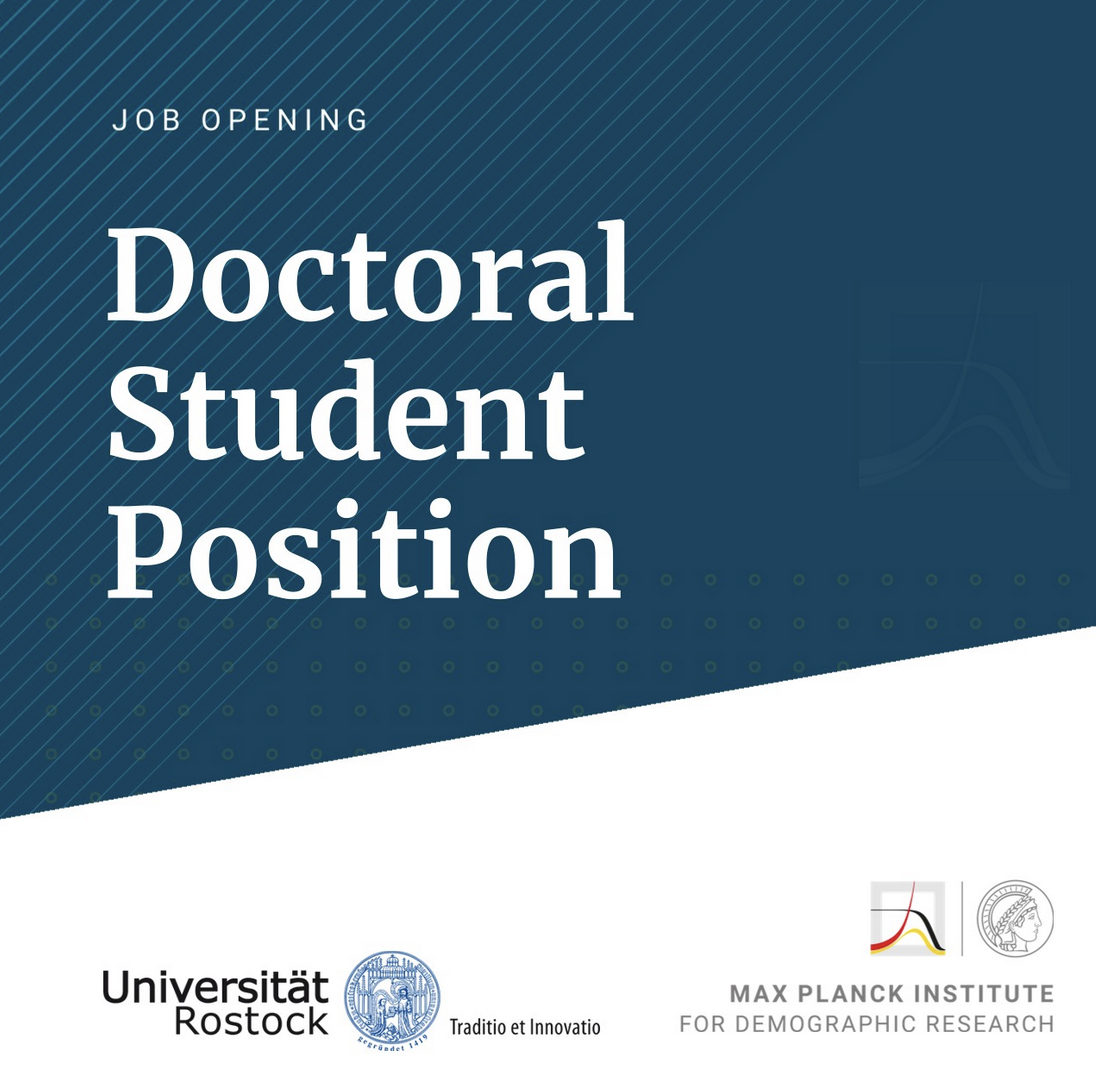
Are you a highly motivated graduate ready to pursue cutting‑edge research in demographic science? The Max Planck Institute for Demographic Research (MPIDR) is inviting applications for a Doctoral Student Position in the Lab of Migration and Mobility within the Department of Digital and Computational Demography.
This opportunity is ideal for students with strong quantitative and programming skills, a passion for research, and academic interests in demography, migration studies, computational social science, or science of science. The doctoral student will be part of an international research community and contribute to innovative projects that redefine how demographic research is conducted and understood.
About MPIDR and the Role
Founded in 1996, the Max Planck Institute for Demographic Research is part of the prestigious Max Planck Society, a global leader in scientific inquiry. The Rostock‑based institute attracts researchers from around the world and fosters a collaborative environment focused on high‑impact demographic research — spanning fertility, migration, aging, and population dynamics.
The Doctoral Student Position offers a unique opportunity to join the Lab of Migration and Mobility, led by Director Emilio Zagheni, where you will work on projects exploring the movement and mobility patterns of scientists and skilled populations. These investigations use large‑scale bibliometric data to measure, model, and forecast scientific mobility, offering fresh insights into global migration processes for highly skilled individuals.
Research Focus: Scientific Mobility and Migration
The core of this doctoral project lies at the intersection of migration science, bibliometrics, and theoretical demography. Through advanced computational and analytical approaches, you will:
- Contribute to ongoing research on scientific mobility and the Scholarly Migration Database.
- Help design and analyse a survey addressing the aspirations, motivations, and constraints influencing researchers’ decisions to move or stay.
- Investigate gender, disciplinary, and geographical differences in global scientific mobility patterns.
The outcomes are expected to deepen theoretical understandings of how and why highly skilled individuals migrate or remain in place, with implications for policy, human capital development, and research network dynamics.
Supervision and Academic Environment
This doctoral project will be supervised by an interdisciplinary team that includes Aliakbar Akbaritabar (MPIDR and University of Rostock) alongside Emilio Zagheni. Selected candidates are expected to reside in Rostock and enroll in the doctoral program of the Institute of Sociology and Demography at the University of Rostock.
The position also offers support for national and international research visits, enabling scientific exchange with broader academic networks and participation in relevant global conferences.
A Supportive, Inclusive Research Culture
The Max Planck Society and MPIDR are committed to equal opportunities and diversity, valuing people from a wide range of backgrounds, beliefs, and identities. The institute actively encourages applications from underrepresented groups and is dedicated to fostering an environment that supports career growth and work‑life integration.
How to Apply
Applications must be submitted online via the MPIDR application survey by the deadline and include the following documents compiled into a single PDF:
- Curriculum Vitae with a list of scholarly publications.
- Motivational statement (max. two pages) outlining your research interests, fit with the project, and how the MPIDR environment will support your academic goals.
- Academic transcripts for undergraduate and master’s degrees (candidates should hold a master’s or equivalent at the start of the program).
- Contact details for two academic referees.
- One writing sample (published or unpublished) demonstrating your scholarly contribution.
📅 Application Deadline: 15 April 2026, 23:59 CET.
The expected start date is flexible, but should be no later than 1 November 2026. The successful candidate will be offered a three‑year contract based on the German public sector salary structure, with an approximate starting gross salary of €40,618 per year.
Learn more and apply here.
Looking for more opportunities? Check out the Opportunities for Youth website.