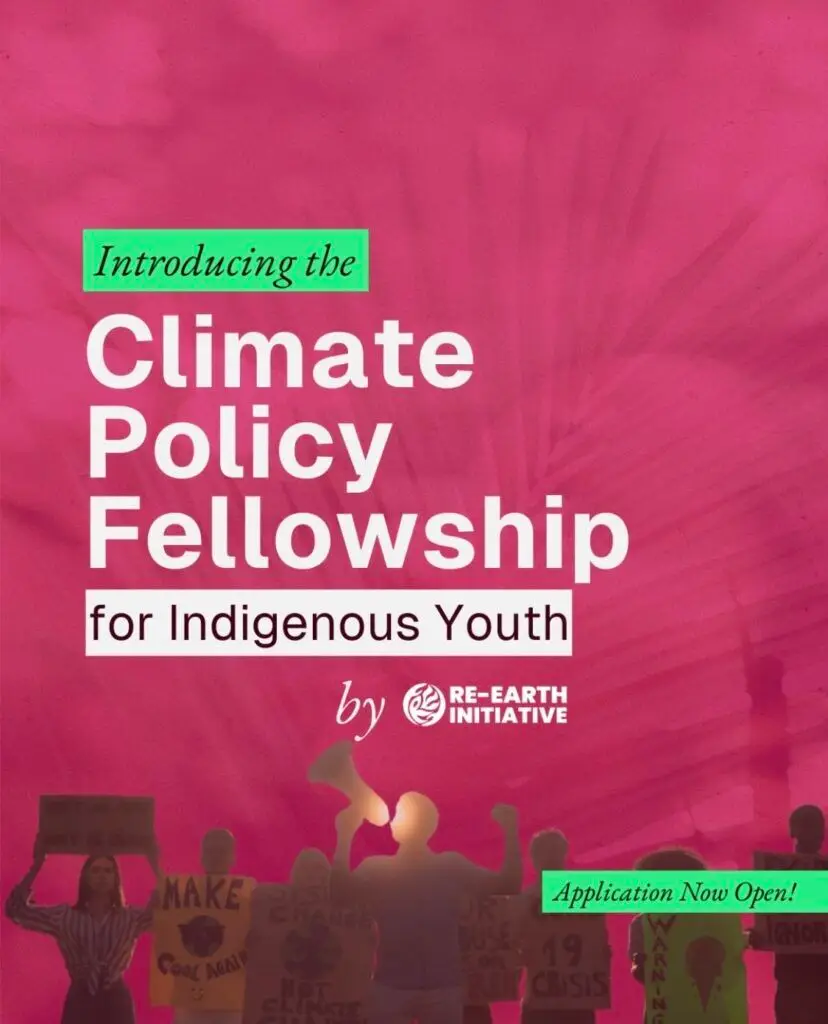
Applications are now open for the Re-Earth Initiative Climate Policy Fellowship 2026, a powerful one-year programme designed to support Indigenous youth leaders in participating in international climate negotiations under the UNFCCC.
The fellowship equips Indigenous young leaders with the knowledge, technical skills, and networks needed to engage in global climate governance while ensuring that Indigenous perspectives, territorial rights, and traditional knowledge systems are represented in climate policymaking.
The programme runs for one year and includes training sessions, policy development work, and participation in major global climate events, including the UNFCCC Subsidiary Bodies Session (SB 64) and COP 31.
Applications are open 2 March – 16 March 2026 and reviewed on a rolling basis.
About the Fellowship
The Re-Earth Initiative Climate Policy Fellowship for Indigenous Youth was created to strengthen Indigenous representation in global climate decision-making.
Indigenous Peoples are among the communities most impacted by climate change, yet their voices are often excluded from international negotiations.
This fellowship aims to bridge that gap by providing Indigenous youth with opportunities to engage directly in climate diplomacy, policy discussions, and global advocacy efforts.
Participants gain practical experience in international climate negotiations while remaining grounded in their communities’ priorities and lived realities.
Purpose of the Fellowship
The fellowship aims to support Indigenous youth leaders by:
- Building technical understanding of UNFCCC negotiation processes
- Strengthening Indigenous leadership in international climate diplomacy
- Supporting policy engagement rooted in climate justice and territorial defense
- Encouraging collaboration between Indigenous communities globally
- Increasing Indigenous representation in global climate forums
The programme emphasizes community accountability and ethical representation, ensuring that participants advocate for climate solutions that reflect Indigenous rights and knowledge systems.
Key Focus Areas
Applicants must select a thematic negotiation track as part of their application.
Available tracks for the 2026 fellowship include:
- Climate Mitigation
- Article 6 (Carbon Markets and Cooperative Approaches)
- Climate Adaptation
- Climate Finance
Fellows will develop expertise in their selected focus area while also gaining broader knowledge of international climate policy processes.
Programme Structure
The fellowship runs for one year and combines virtual training with in-person participation in global climate events.
Virtual Engagement
Participants will take part in:
- Virtual training sessions
- Policy research and brief development
- Cohort coordination meetings
- Strategy discussions with other fellows
Training topics include:
- Climate policy analysis
- UNFCCC procedures
- Negotiation literacy
- Advocacy strategies
International Participation
Fellows will also participate in key international climate negotiation events:
SB 64 – UNFCCC Subsidiary Bodies Session
📅 June 2026
COP 31 – UN Climate Conference
📅 November 2026
These events provide opportunities to observe negotiations, participate in side events, and collaborate with global climate justice networks.
Eligibility Criteria
Applicants must meet the following requirements:
- Be 18–30 years old
- Self-identify as Indigenous
- Demonstrate meaningful connection to their community or Nation
- Show prior engagement in climate justice, Indigenous rights, territorial defense, or policy advocacy
- Express strong motivation to participate in international climate negotiations
No formal documentation of Indigenous identity is required, but applicants must demonstrate authentic community connections.
Application Requirements
Applicants must complete the online application form and provide:
- Personal information and contact details
- Indigenous People, Nation, or community affiliation
- Territory or region of engagement
- Language proficiency level
- Organizational affiliation (if applicable)
- Description of relevant experience and motivation
Additionally, applicants must submit:
Letter of Recommendation
- Maximum two pages
- PDF format
- From a community leader, organization, or movement reference
📅 Recommendation Letter Deadline: 21 March 2026
Ideal Candidate Profile
The fellowship seeks applicants who demonstrate:
- Strong accountability to their Indigenous community
- Experience in climate justice or advocacy work
- Interest in international climate governance
- Ability to collaborate across cultures and regions
- Commitment to long-term climate justice efforts
Participants are expected to actively engage in training sessions and attend international events.
Learning Outcomes
By the end of the programme, fellows will gain:
- Strong understanding of UNFCCC negotiation systems
- Skills in climate policy analysis and advocacy
- Experience participating in international climate diplomacy
- Expanded networks within Indigenous and climate justice movements
- Confidence advocating for rights-based climate solutions
For more exciting opportunities including scholarships, fellowships, internships, and grants, click here