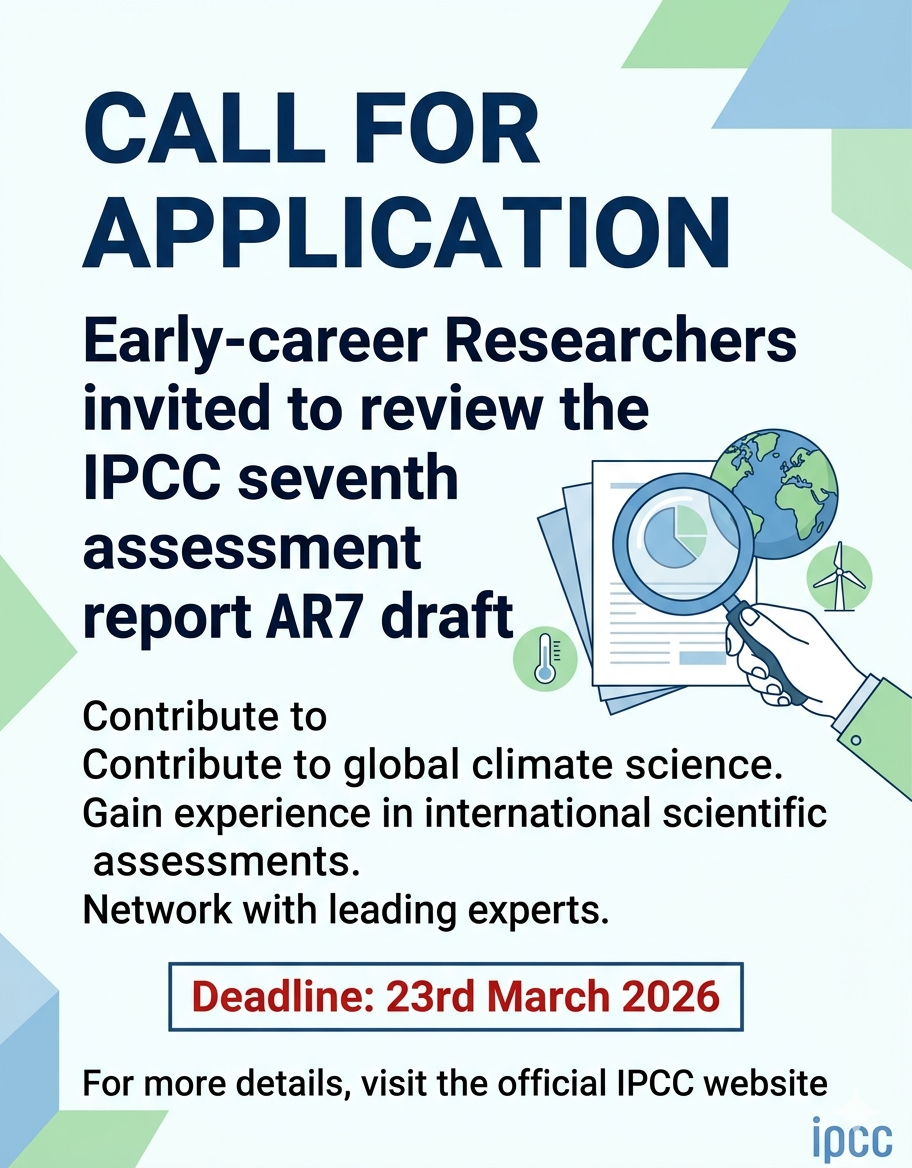
Early-career researchers around the world are invited to contribute to the global climate science assessment process through a coordinated expert review of the First Order Draft (FOD) of the Working Group I contribution to the IPCC Seventh Assessment Report (AR7).
Led by the Association of Polar Early Career Scientists (APECS) and partner networks, this initiative provides early-career scientists with a unique opportunity to participate in the review of “The Physical Science Basis,” the scientific foundation informing global climate policy.
Eligible researchers are encouraged to apply by 23 March 2026 (23:59 UTC-12) to take part in this collaborative review process.
About the IPCC Early-Career Group Review
The Intergovernmental Panel on Climate Change (IPCC) is the United Nations body responsible for assessing climate science and producing comprehensive reports that guide international climate policy.
As part of the development of the IPCC Seventh Assessment Report (AR7), the First Order Draft of the Working Group I report—focused on the physical science basis of climate change—will undergo an expert review phase.
Through this initiative, early-career researchers can participate in the official review process, helping to evaluate draft chapters and strengthen the scientific quality and policy relevance of the report.
Benefits of Participating
Selected participants will gain several professional advantages, including:
-
Hands-on experience reviewing global climate science assessments
-
Recognition as an official IPCC expert reviewer
-
Opportunity to contribute to a major international climate report
-
Networking with global early-career climate scientists
-
Training and mentorship in scientific review processes
Participants’ name, affiliation, and country of residence will be listed in the Expert Reviewers Annex of the final assessment report.
Who Can Apply?
Applications are open globally, with strong encouragement for individuals from underrepresented regions and communities to apply.
Eligible applicants include:
-
Advanced Master’s students
-
PhD candidates
-
Postdoctoral researchers
-
Early-career academics or professionals
Applicants should generally be within 10 years of completing their PhD, although extensions may be considered for documented career interruptions such as parental leave, caregiving responsibilities, health issues, or other career breaks.
Candidates should also be familiar with recent scientific literature in climate science or related fields relevant to Working Group I topics.
Review Process and Time Commitment
Participants selected for the coordinated group review will:
-
Receive training and onboarding (April–May 2026)
-
Be assigned specific chapters or sections
-
Review approximately 10–30 pages of draft content
The official IPCC expert review period for the First Order Draft will run from 10 August to 2 October 2026.
Participants should expect to commit approximately 30–50 hours in total, including:
-
Training sessions
-
Coordination meetings
-
Conducting the scientific review
Reviews submitted to the IPCC will not be anonymous, ensuring contributors receive recognition for their work.
Organizations Coordinating the Initiative
This early-career review effort is coordinated by a consortium of global research networks led by:
-
Association of Polar Early Career Scientists (APECS)
In collaboration with:
-
International Continental Scientific Drilling Program Early Career Researchers
-
International Glaciological Society Early-Career Glaciologists Group
-
Past Global Changes Early Career Network
-
Polar Impact
-
Permafrost Young Researchers Network
-
World Climate Research Programme Climate and Cryosphere Project
-
Young Earth System Scientists (YESS)
Application Deadline
23 March 2026 (23:59 UTC-12)
Applicants are responsible for ensuring their participation complies with institutional, funding, or governmental requirements.
How to Apply
Interested candidates can apply through the official application portal:
If you are an early-career researcher working in climate science, earth systems, cryosphere studies, or related fields, participating in an IPCC review is an excellent way to build credibility in the global research community and gain insight into how major climate assessments are produced.
Click here for more details about the call for applications.
Discover more of such Opportunities here.